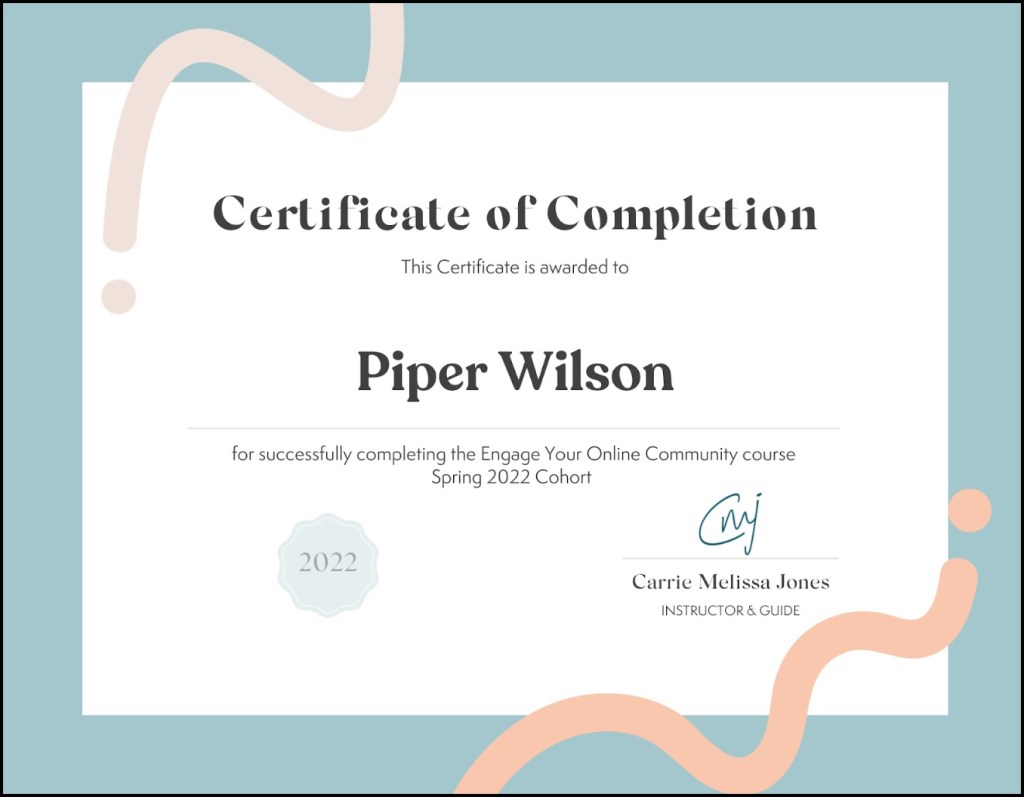
From the site: This 9-month course cohort and community takes you on a journey from an uncertain, overwhelmed community builder to a confident and organized leader. Our only course that offers direct access to Carrie, the EYOC Accelerator, is a unique experience that takes you through the frameworks we use to build communities with our clients—and connects you with an amazing network of community-building peers.
The course was amazing, but the magic is in the community she created for her students. Everyone who takes the course is welcome to remain part of the community. We share our experiences with each other, ask questions, give advice, and celebrate our victories. We are a close-knit group. I am safe there.
This is the proposal I submitted to CMX in June 2022. While my topic wasn’t accepted, they did ask me to speak on a panel, “How To Create Memorable Community Events (YouTube Link).”
In addition to the written proposal, they asked for links to videos of past speaking experiences. I hadn’t spoken publicly before, so I created a couple of videos. Heaven help me; I’m going to provide links to them below. Enjoy!
proposal
I have ritualized my skincare routine. It is some time I carved out just for me. At first, it was a chore. Now, I find it energizing, and I’d miss it if I stopped.
Skincare is, by necessity, repetitive and routine. So are many community management tasks. They can also feel tedious, but when you reframe them into mindful activities, they become a source of energy and renewal.
It is easy to lose touch with our members when we don’t spend time with them. It can cause us to lose sight of what’s important to them – and us. Surveys gather useful information but can’t create a bond or a connection with our members. That bond is one of the things we need to help nurture the health of our communities.
Many of us gravitate to this field because we are passionate about connecting – both for ourselves and others. Cultivating community care habits and rituals ensures we continue feeding that passion. It makes our communities better.
Takeaways:
Curate community management rituals.
Reframe everyday tasks as good community hygiene.
Methods to stay connected with community members, even if the job description doesn’t require regular interaction in the community.
Practical ways to invest in the parts of the job that bring joy.
Do not use your community as a sales or marketing funnel without your members’ knowledge or consent. In other words, don’t try to fool them into thinking you’re building a place for them when you’re trying to use them as a source of income.
It is possible to use a community to sell and market your product, but do not base your community’s purpose on those points.
Communities are born in order to satisfy someone’s need for information, support, recreation, or relationship. For example, a group of people who share the same medical diagnosis may decide to create an online community so they can support one another through their illness.
Infographic – The life cycle of an online community.
In a TEDx talk, Mark Wills says, “online communities challenge our thought process of what we understand community should be.” And it’s true. When I was researching this post, I looked for definitions of community. Almost all of the examples I found referred to physical communities. But people in online communities are not connected by location. They are created by people with common interests, goals, or values and they share those qualities via online connections.
Wikipedia says that, “The origins of the term (online) community manager take their root in the computer games industry with the advent of MMORPG (Massively Multiplayer Online Role-playing Games) back in 1995.” The problem is, that history doesn’t take into consideration the other names by which community managers operated under in the decades previous to online gaming. Even before Al Gore “fathered the internet” and all the writing style guides said that internet should be spelled with a capital “I,” there have been online communities. And, there have been people managing and moderating those communities. (On a side note, the Chicago Manual of Style recently announced that Internet will be lowercase.)
Feverbee—This is by far my favorite blog. Published daily in bite-sized pieces, Rich Millington offers wisdom and practical advice for community managers. In addition, Feverbee hosts a vibrant and active online community on the Discourse platform.
I’ve been involved in community moderation and management for over 10 years. Recently I realized that I have evolved as an individual because of it. Now, everyone grows and changes as the years go by, but I think my time in online communities has had a unique impact on my personality.
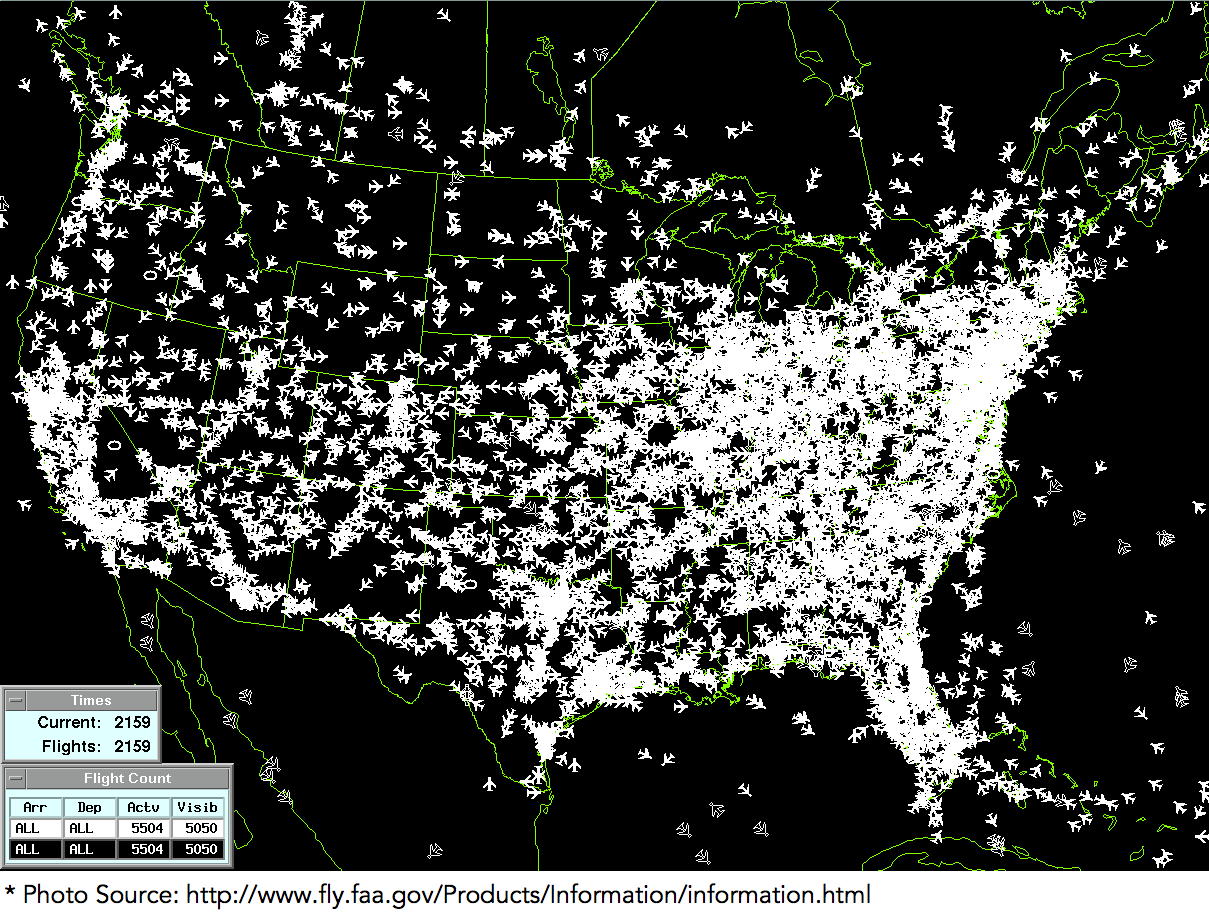
Each day, approximately 50,000 aircraft move through the US National Airspace System. Air traffic controllers rely on heavily on procedures to guide aircraft from one point to another. Here’s a snapshot in time of about 5,000 aircraft flying through the air.



 Piper T Wilson